
 REPRESENTING THE LARGEST COLLECTION OF 2X2 HISTORICAL DOCUMENTS ON THE INTERNET
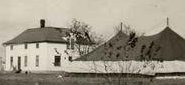 Perry, Oklahoma Conv, 1942
TTT EDITOR'S NOTE: This essay
was published in the book: Profiles in Belief Volume IV: Evangelical, Fundamentalist, and Other Christian Bodies by Arthur Carl Piepkorn, pp 58-62, 83-86; Harper & Row Publishers (in public domain), June 1979. ISBN: 0060665815 Out of print.
See pp 58-62, 83-86: "Christian Fellowship (People on "The Way," Disciples of Jesus, Friends, "Two-By-Twos"
Author's Background: Arthur Carl Piepkorn was born in 1907 in Milwaukee, WI. He graduated from Concordia College, Milwaukee, in 1925; from Concordia Seminary, Clayton, MO in 1928; and received his doctorate at the University of Chicago by 1932. He married Miriam Södergren on December 26, 1936; they had four daughters. From 1933-1936, he served as an interim pastor twice, and as the sole pastor of congregations for more than seven years. He was a full time chaplain in the U.S. Army for eleven years. He went on active duty in Nov 1940. In early 1945, he was assigned to the personal staff of General Dwight D. Eisenhower, making him the Senior Chaplain in the European Theater. Following the end of WWII, he served as Commandant of the U.S. Army Chaplain School (1948-50), and President of the U.S. Army Chaplain Board (1950-51). His thirteen medals and decorations include the Legion of Merit. He retired in the rank of Colonel.
In 1951 he began teaching Systematic Theology at Concordia Seminary in Clayton, Missouri, a suburb of St. Louis. His academic career lasted from 1951-73 when he died from a heart attack. He wrote several books and published more than 200 articles. His greatest achievements was the four-volume classsic, Profiles in Belief: The Religious Bodies of the US and Canada. This book is a standard, comprehensive reference work in the study of American and Canadian church history and theology, specifically focusing on the categorization of denominations, holiness, Pentecostal, evangelical, and fundamentalist bodies. It is used to analyze religious groups. He is known for describing himself as: "I am Christian first, a Western Christian second, a Lutheran third and a Missouri-Synod Lutheran fourth." He called himself an "evangelical catholic."
PROFILES IN BELIEF
THE RELIGIOUS BODIES OF THE UNITED STATES AND CANADA
VOLUME IV - EVANGELICAL, FUNDAMENTALIST, AND OTHER CHRISTIAN BODIES
By ARTHUR CARL PIEPKORN
PUBLISHED BY HARPER & ROW, PUBLISHERS, INC.,1979
NOTE: Footnote Numbers 12-26 are in [Brackets]
Christian Fellowship (People on "The Way," Disciples of Jesus, Friends, "Two-By-Twos") [12]
In 1886 Mr. John George Govan (1861-1927) of Edinburgh, Scotland, founded the Faith Mission for the evangelization of spiritually neglected rural and out-of-the way Scottish communities. The workers of the Faith Mission—known as "pilgrims"—went about in pairs, trusting in God for the supply of their needs. Initially the "pilgrims" were all male, but in 1885 the Faith Mission sent out the first pair of young women "pilgrims." In 1892 the Faith Mission extended its work to Ireland. William Irvine, a Scotsman, became a member of the Faith Mission in 1895. After a short period of service in Scotland, he went to work in Ireland. One of his most successful missions was at Nenagh, County Tipperary. Around 1897 he began to feel that the renunciation made by the Faith Mission "pilgrims" was not radical enough. He declared his independence of the Faith Mission and together with a nucleus of his converts he began to branch out on his own. In 1900 the Faith Mission publicly disavowed the independents and in the following year it announced the formal dropping of Irvine's name from the roster of its "pilgrims." [13]
About this time Edward Cooney gave up his secular work and associated himself with Irvine as a "tramp-preacher."[14] Cooney's strong personality and his flaming zeal soon won him a place of leadership in the movement, but differences between him and Irvine led to Cooney's early withdrawal. [15]
Missionaries of the new movement soon began to go into other English-speaking lands, including the United States (1903) and Canada (1904). [16] The first annual "conventions" (see below) in North America were held in 1906. In 1911/1912 two missionaries reportedly from America, Scots-born James Jardine and German-born Otto Schmidt, established their first group in Germany at Lustnau-bei-Tübingen in Württemberg. Subsequently the movement has extended its outreach into other countries.
The fellowship regards as superfluous many features that other religious movements have found inescapable and even useful. It sees no need for an identifying name other than Christian, nor has it found legal incorporation necessary. Because the earliest Christians met in homes, it acquires no church property or real estate by purchase or in any other way. It issues no membership certificates or ministerial credentials. Most distinctive of all is its refusal to publish tracts, books of devotion, or other religious literature. It acknowledges the Bible (usually but not exclusively in the King James Version in English-speaking countries) as its only textbook, and the study and application of the Bible receives prominent emphasis in its program. To be effective, the movement holds, the communication of spiritual life must take place through the oral witness of person to person and cannot take place through printed matter or through mass-communications media like radio. It obtains its King James Version Bibles and its hymnals [17] from R. L. Allan and Son, Glasgow. It also rejects catechetical indoctrination and agencies of Christian education like the Sunday school, although it stresses Bible-centered home training, family life, and child discipline. It has shown considerable success in holding its young people.[18] In North America the fellowship is racially integrated.
The fellowship sedulously shuns publicity. [19] Members are generally reluctant to provide information about the fellowship that would come under the head of "communicating spiritual life" except to bona-fide seekers after association with the movement. The inquiries of others about the beliefs and the history of the fellowship are likely to be met with the reply, "You'll find it in the Bible."
In general, the theological views of the members of the fellowship conform broadly to most of the convictions and emphases of other unconfessional, evangelistic, biblically oriented, perfectionist movements that originated in the nineteenth century. An examination of the texts in Hymns Old and New confirms this impression.
Their views on the Trinity are those commonly held by conservative Christian groups. So are their positions on the deity and humanity of Christ and on the atonement through his death on the cross, published statements to the contrary notwithstanding.
Rebirth is seen as the indispensable condition of salvation. The new birth is the result of faith in the Word of God as proclaimed by a "servant" (short for "servant of God," the technical designation for a preacher in the fellowship). There is a strong stress both on God's grace and on holiness as the necessary and deliberate choice of Christ's followers.
In its teaching on the last things the movement is premillennial.
There is a strong in-group feeling in the fellowship and mutual aid, even to the point of sharing possessions in time of need, plays an important part. They profess no desire "to denounce and pull down others," but only "to uphold that which [they] believe in Christ." At the same time they relate the apostolic questions—"How are men to call upon him in whom they have not believed? And how are they to believe in him of whom they have never beard? And how are they to hear without a preacher? And how can men preach unless they be sent?" [20] —wholly to the activity of the preachers of their fellowship. Their teaching about the church tends to be exclusive and often they appear reluctant to concede that the Holy Spirit works through other Christian communities. At the same time, they declare that God is the Judge of his people, not they. His Word, they hold, is both the basis of his judgment and the basis of their understanding of his will for their life here and now.
The fellowship rejects infant baptism and practices only believer's baptism by immersion in the name of the Father and of the Son and of the Holy Ghost. Converts who have been baptized in another Christian community are normally rebaptized.
The Lord's Supper ("breaking of bread") is observed every Sunday. Bread and unfermented wine in a common cup are used and only believers may take part. The service is understood as a memorial meal at which the communicants are to reflect on what Christ has done for them and what they owe him.
The individual's conscience determines for him if he may participate in war and military service. In practice most members of the fellowship accept noncombatant service.
As part of their rejection of "worldliness," the members of the fellowship wear no jewelry (except that a married person wears a wedding ring, as a witness to the sacredness of marriage). The women wear simple, modest dresses, use no makeup, and do not cut their hair. Possession of television sets is generally discountenanced. [21]
The movement commends the ideal of poverty on the basis of Luke 9:1-5; 10:1-9; and Matthew 10:5-42. While the ordinary members are free to pursue their respective secular callings, the preachers (who must have proved their ability to earn a living in an honorable occupation) are expected to devote their whole time and ability to the ministry, to take Christ's counsel of poverty literally, and to give up all their possessions and property.
From the beginning of the movement, the preachers—or "gospel workers"—have gone about in pairs, [22] two men or two women, persuaded that they are successors of the apostles and bearers of apostolic authority. They are normally unmarried and depend for their maintenance, housing, food, and other logistical support (including telephone and transportation) upon the members of the fellowship. The movement's stress on the command of Matthew 10:7, "As ye go, preach" (KJV), is the basis for "Go-Preachers" as an outsiders' designation for the movement's missionaries. In the rare cases where a minister subsequently marries, he normally renounces his ministry.
Their normal procedure in former years, still followed in rural areas, is for a pair of preachers to go into a community, enter the home of someone "worthy," and state that they have come to preach the Gospel the authentic "Jesus way." Public school buildings were at least at one time favored places for conducting meetings. In beginning work in a new urban area, a team of workers will enter a neighborhood and live among the residents for a few weeks while they conduct evangelistic meetings in a rented hall or vacant store until a nucleus of adherents has been won. Since the servants literally "live the life" that Christ commanded, going out two by two with nothing in their hands or pockets, their unqualified commitment tends to provide moral support for their authority.
The discipline within the fellowship appears to be very strict, and the servants enjoy great prestige and authority.
Communication within the fellowship is very good and makes extensive use of personal contacts and mail.
The membership is no longer as predominantly rural and small-town as it was originally or even as recently as a generation ago, and the fellowship is represented in all major cities. [23]
The preacher-missionaries are known as "brother-workers" and "sister-workers" as well as "servants of God." Newly appointed ministers are initially assigned to assist an experienced minister in evangelistic work and in ministering to assemblies of members. The supervision of a "field"—generally a state or province—is in the hands of an "overseer" ("senior servant" or "elder brother").
Each house-church is presided over by a "local elder" or "bishop." (The average membership of such a church is about twelve; some churches are smaller, and a few have as many as twenty or, occasionally even, more members.) Wherever possible, it is in the elder's home [24] that the members of the house-church meet on Sunday for the Lord's Supper ("breaking of bread"), exhortation, testimonies, and prayers. During the week they normally meet once or twice for Bible study and prayer. All members are expected to be present at these services, unless prevented by severe illness. Men and women alike may address the assembly on Bible passages of their own choice, and their understanding and interpretation of the passage is received respectfully. When servants conduct evangelistic meetings in a community, the members of all the house-churches of the area are expected to be present. These "gospel services" are usually held in a rented hall, a store, or a school building. One observer notes that, while the services appear bland, in his experience the congregations assemble with eager and quiet expectancy a full quarter of an hour before the scheduled time that the meeting is to begin.
The churches administered by a team of preachers form a "field." Members of a number of "fields" meet at an "annual Christian convention" or camp meeting. The usual site for such a convention—which lasts from three to four days—is a large farm, with tents pitched for the meeting, for meals, and for sleeping. This is the high point of the year's activities for the participants. Observers report that attendance at these conventions ranges from an estimated 500 to an estimated 2,000 and involves, in the words of a senior servant, "practically 100% of the members." At these conventions all matters pertaining to methods of work, doctrine, discipline of members, local elders, the ministry, and similar issues, are fully considered and settled. The "overseer" arranges definite fields of labor for all ministers within the area.
A state or province is the normal unit of supervision. There are house-churches of the fellowship in all fifty states and throughout Canada. [25] The number of conventions in a state or province varies with the number of members that the fellowship has. The "overseers" in North America, acting in fellowship with one another, exercise general supervision over the ministers and the membership on this continent. Since the fellowship keeps no membership records, the total number of active members is not determinable; conservative estimates place the movement's North American membership at between 15,000 and 30,000. [26]
Footnotes 12 - 26:
12. The bulk of the information in this section derives from reports of a number of observers across the continent whose integrity the present writer has no reason to doubt, from a letter by a senior servant of the fellowship, and from a personal interview with two state overseers. (The observers are not themselves members of the fellowship, but their attitudes toward it range from neutral to highly appreciative.) The designation "The Way" (or "the Jesus Way") reflects New Testament usage (Acts 9:2; 18:25; 19:23; 22:4; 24:14, 22). Members of the fellowship frequently refer to one another as "friends." They themselves hold that they stand in asuccession of communities that goes back to apostolic times and that they are merely perpetuating an unbroken tradition almost 2,000 years old.
13. Irvine's family name is sometimes given incorrectly as Erwin. The information about the Faith Mission and Irvine's early connection with it has kindly been provided in a letter to the present writer by Mr. John G. Eberstein, 5 Corstorphine House Avenue, Edinburgh, Scotland, a member of the Faith Mission since 1922, its president for some twenty years, and the editor of its magazine for more than three decades. See also his article, "Faith Mission," in Burton L. Goddard, ed., The Encyclopedia of Modern Christian Missions: The Agencies (Camden, N.J.: Thomas Nelson and Sons, 1967), no. 523, p. 279. On Govan see Isobel Rosie Govan, Spirit of Revival: Biography of J. G. Govan, Founder of the Faith Mission (London: The Faith Mission and Marshall, Morgan, and Scott, 1938).
14. From him comes the much resented name "Cooneyites" that nonmembers have often derisively applied to members of the fellowship."Tramp-preacher" appears to have been Cooney's own designation for himself; the term has long been used by outsiders for the missionaries of the movement.
15. According to one unverifiable report, Cooney came to the United States, settled in the West, and began a rival movement. The cited letter from Mr. Eberstein states that Cooney died in Ireland in the mid-1960s.
16. One of the first to emigrate to North America was Irvine Weir. The identity of this first name with the family name of the organizer of the movement has misled some into referring to the organizer by the conflate name William Weir Irvine. Other early missionaries to North America were George Walker; James, Nicol, and Walter Jardine; William and John Hendy; George and Ella Johnson, one of the fairly few married couples in the leadership of the movement; Samuel Charlton; Anna Groves; and May Underwood (d. 1968). The fellowship's growth in Alberta is more or less typical of its spread in western Canada. It came to the province between 1910 and 1914, grew slowly at first, expanded rapidly during the depression, and by the mid-1940s had between 1,200 and 1,800 members in the province, with three summer camps (William Edward Mann, Sect, Cult, and Church in Alberta [Toronto, Ontario: University of Toronto Press, 1955], pp. 23, 30, 45, 56, 70, 108-110, 116).
David Christie (d. 1969) and his wife, Emily, née Wilson, came to Hawaii in December 1923 and began working on the island of Oahu the next month. Attending ministers (elders) conduct services inhomes on all four of the main islands. Although membership rosters are not maintained, the number of active believers is estimated at between 150 and 200, according to a local leader of the movement who prefers to remain unnamed. John F. Mulholland, Hawaii's Religions (Rutland, Vt: Charles E. Tuttle Company, 1970), p. 205, calls the fellowship "a church without a name."
17. Hymns Old and New, their current hymnal in English-speaking communities, makes extensive use of Gospel songs and choruses, although it contains a moderate number of classics out of the British tradition of hymnody. About one tenth of the 335 hymns in Hymns Old and New arelisted in the indices of the revised edition of John Julian, ed., A Dictionary of Hymnology (London: John Murray, 1915). On the other hand, only 3 of the 118 hymns in the relatively sophisticated and deliberately ecumenical selection in Luther Noss, ed., Christian Hymns (Cleveland, Ohio: World Publishing Company, 1963), are in Hymns Old and New—"Abide with Me," "Jesus, Thou Joy of Loving Hearts," and "O God of Bethel."
There is one explicitly trinitarian doxology, stanza 4 of no. 239, "Cease Not to Praise God for All He Has Done," by "C.H.L." Reportedly this hymn is in frequent use in the services of the fellowship. Of the texts in Hymns Old and New many areby adherents of the movement. Eighty-nine bear the names or initials of the authors. Most of the authors have contributed only one text identified with their name, but S. Jones is represented by twenty-two, Fanny Crosby and Frances Havergal have six apiece, Horatio Bonar has five, Isaac Watts three, and Ada R. Haberson, Gerhard Tersteegen, N. Norton, and A. A. Pollard two each. The German version of the hymnal, Alte and neue geistliche Lieder, has 195 hymns in alphabetical sequence, without tunes or indications of authorship. The hymns stress renunciation of the world, the bliss of the hereafter, and personal religion generally.
18. The permanence of the local fellowships varies. In one case that the present writer was able to check personally, the Reverend Theodore Dautenhahn, later of St. Louis, but in 1938 pastor of Trinity Church, Stewardson, Illinois, reported that at that time the movement had made a considerable number of converts in and around Brownstown and Neoga, Illinois. His successor in the pastorate of the Stewardson parish in 1967, the Reverend George C. Williams, reported to the present writer that he had not been able to find any trace of the movement in the area. (It is possible that the churches in question had moved to nearby communities upon the death or removal of the bishops.) On the other hand, the present writer knows of two "sister-workers," one at work in Denmark, the other in the United States, who were born into families on "The Way." The fellowship in Trenton, New Jersey, has been in existence at least since 1948. One of the churches in Appleton, Wisconsin goes back to the period of World War I. Of the three conventions in Wisconsin the one at Marion has been meeting at the same place for over fifty years, the one in Menominee at the same place for over thirty years.
19. The literature on the fellowship is very scanty and does not differentiate between the original movement and the "Cooneyite" schism. One of the longest discussions known to this writer is an article by W. M. R[ule], "The Cooneyites or Go-Preachers: A Warning," Our Hope, vol. 30 (1923/1924), pp. 426-436. It has been reprinted under the same title as a 16-page pamphlet (New York: Loizeaux Brothers, n.d.). Rule also published a very similar 24-page pamphlet, The Cooneyites or "Co-Preachers" and Their Doctrines (5th edn.; London: Central Bible Truth Depot, n.d.). This pamphlet appears in an abridged form with editorial annotations under the same title as achapter in William C. Ervine, ed., Heresies Exposed: A Brief Critical Examination in the Light of the Holy Scriptures of Some of the Prevailing Heresies and False Teachings of Today (4th edn., 33rd printing; Neptune, N.J.: Loizeaux Brothers, 1964), pp. 73-78. Rule's strongly polemical evaluation, written from a conservative Dispensationalist viewpoint, charges the adherents of the fellowship with teaching that "the Lord Jesus Christ had sinful flesh in him that needed to be overcome"; that they have "no room for the precious atoning blood of Christ as the ground of salvation"; and that they ignore "the sovereign work of the Holy Spirit in the souls of men" (The Cooneyites or "Go-Preachers" and Their Doctrines, pp. 18-20). Adherents of the movement reject these charges as unwarranted misrepresentations. Other discussions of the fellowship include an anonymous and undated 12-page tract, A Cunning Cult (Coffeyville, Kan.: Gospel Tract Mission, n.d. [after 1951]); William E. Paul, The "Two by Twos": Who Are They? What Do They Believe? (North Platte, Neb.: News and Truths, 1968) (18-page tract); a 55-line article, "Die Jünger Jesu," in Kurt Hutten, ed., Seher—Grübler—Enthusiasten: Sekten und religiöse Sondergetneinschaften der Gegenwart (6th edn.; Stuttgart: QuellVerlag der Evangelischen Gesellschaft, 1960), pp. 441-442; a 41-line article, "Disciples of Jesus," at no. 0871 in Johannes Gründler, Lexikon der christlichen Kirchen und Sekten (Vienna, Austria: Herder, 1961), vol. 1, pp. 411-412; a 15-line item, "Cooneyites," in J. Oswald Sanders and J. Stafford Wright, Some Modern Religions (2nd edn.; London: Tyndale Press, 1956), p. 60, almost identical with the 15-line summary under the same heading in J. Oswald Sanders, Cults and Isms (rev. edn.; Grand Rapids, Mich.: Zondervan Publishing House, 1962), p. 166; an 11-line paragraph in Elmer T. Clark, The Small Sects in America (rev. edn.; Nashville: Abingdon-Cokesbury Press, 1949), P. 184; and a 9-line article by Theodore G. Tappert, "Cooneyites," inLefferts A. Loetscher, ed., Twentieth Century Encyclopedia of Religious Knowledge (Grand Rapids, Mich.: Baker Book House, 1955), vol. 1, p. 298.
20. Romans 10:14-15.
21. One of the local nicknames by which the movement has sometimes been known is "Black Stockings" or "Black Sox."
22. Hence the name "Two by Twos" for the movement.
23. In late 1967 a district fellowship that covered the not too densely populated Snohomish County in the state of Washington reportedly had 14 house-churches; King County, of which Seattle is a part, was said to have at least 50 house-churches. Denver, Colorado, reportedly has about 24 house-churches, Greater Los Angeles 37, New Orleans only one (but several in upstate Louisiana). The 1966-1967 roster of "servants" for Wisconsin lists 12 teams (24 servants) in that state. The 1968-1969 roster of servants for New York, New Jersey, and New England list 18 teams (36 members). The 1967 roster of conventions lists three each in Wisconsin and North Dakota, and two each in Minnesota and South Dakota.
24. On the basis of these meetings, the members of the fellowship sometimes refer to it as "the Church in the House." The term "cell" to describe house-churches is explicitly repudiated.
25. Within the space of a few months in 1967-1968 the present writer received reports of missionaries of the movement currently at work in every region of the continental United States, as well as in British Columbia, Alaska, the West Indies, and the Republic of China (Taiwan), and behind the Iron Curtain in Europe. Since then he has received reports of active elements of the movement in Scandinavia, Africa, and South America.
26. The present writer has not succeeded in determining if the rival movement reportedly begun by Cooney has survived. Leaders of the fellowship profess to have no knowledge of its existence.